
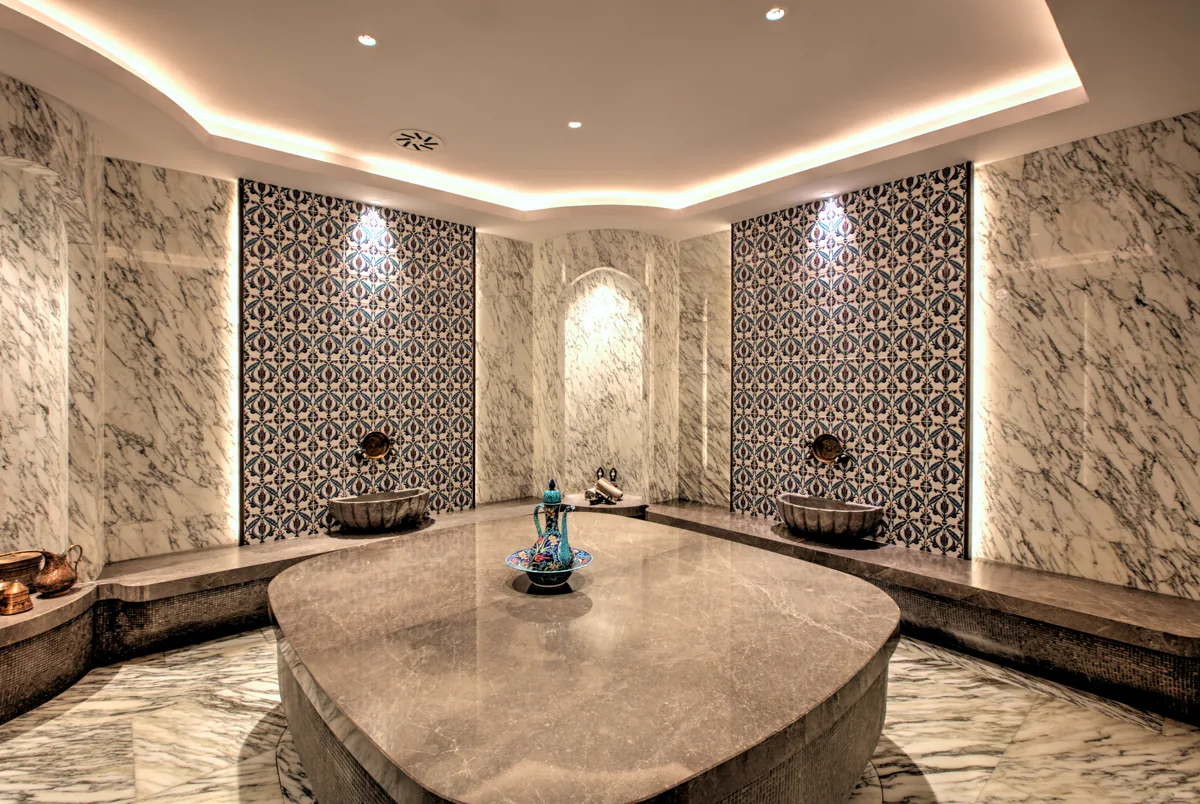
Expertise · 04
Slab selection and layout
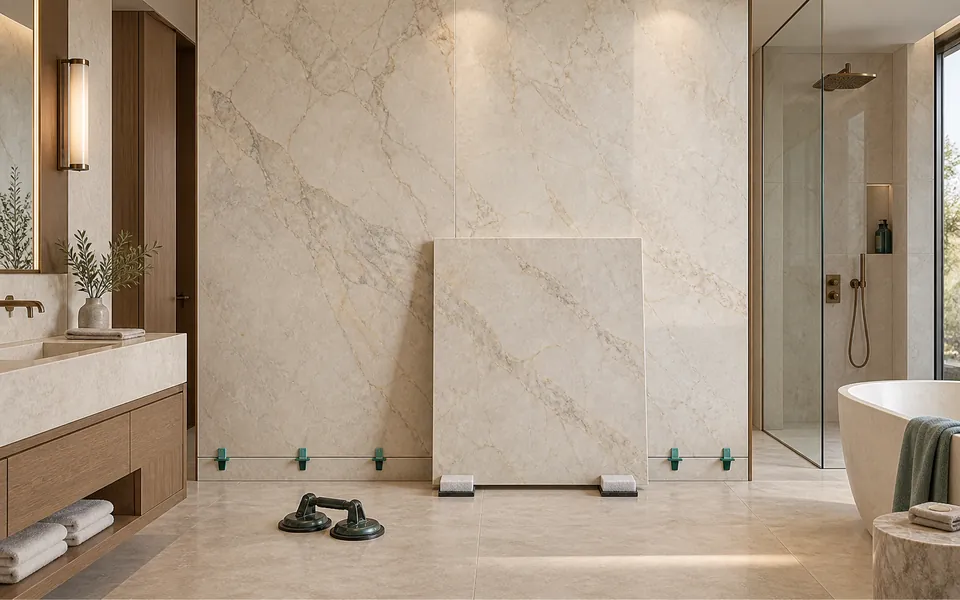
Natural variations in veining and tone are part of the design material. A pattern seen in a small sample can create a different impression across a large floor or wall. Slab selection and piece layout therefore deserve attention together. Recognising that variation early helps establish a realistic and precise visual brief.
What the service covers
Illustrative images · AI-generated
Floors and surface layouts
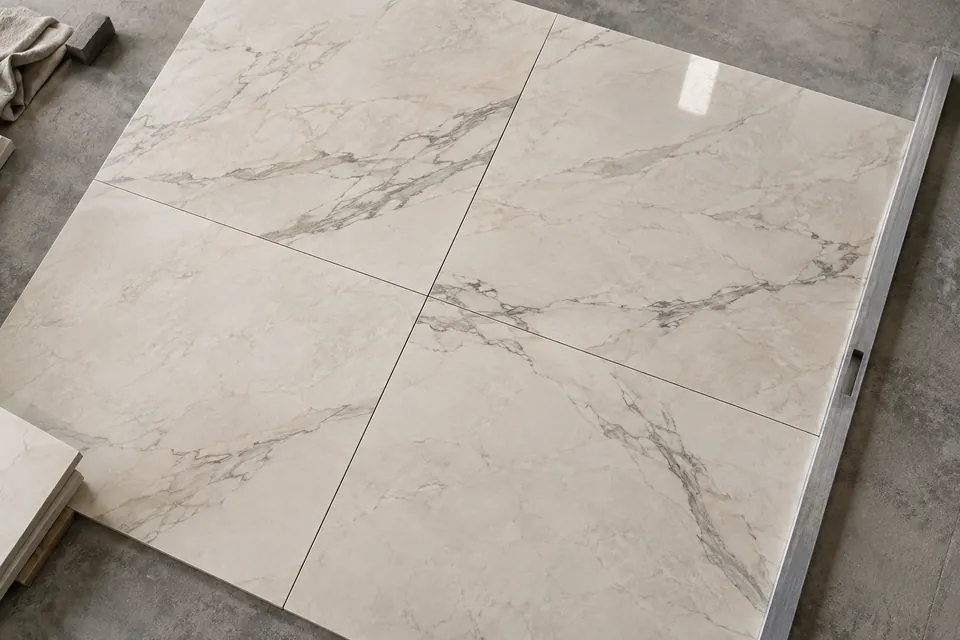
Piece dimensions, joints and transitions to adjacent materials influence the overall floor. Door thresholds, columns and furniture interfaces need specific details. Intended use and surface finish should be reviewed together; in wet areas particularly, colour and polish are not sufficient selection criteria.
Countertops and bespoke elements
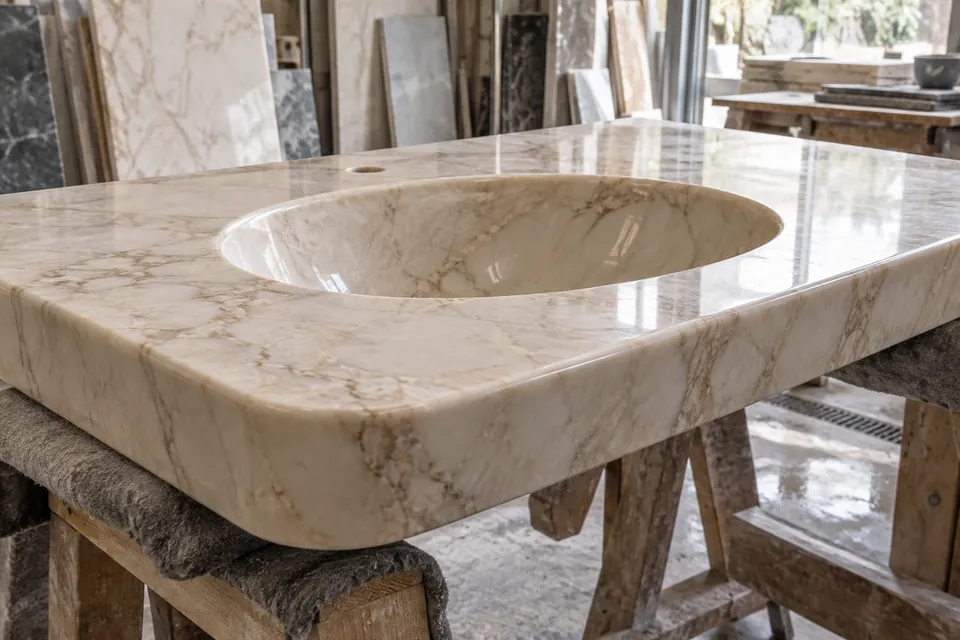
Counter tops, basin surrounds and decorative pieces require clear dimensions, edge profiles, openings and support arrangements. The structure beneath the stone and access for installation also matter. Resolving openings and interfaces before manufacturing helps reduce the need for adjustments on site.
Veining, tone and transitions
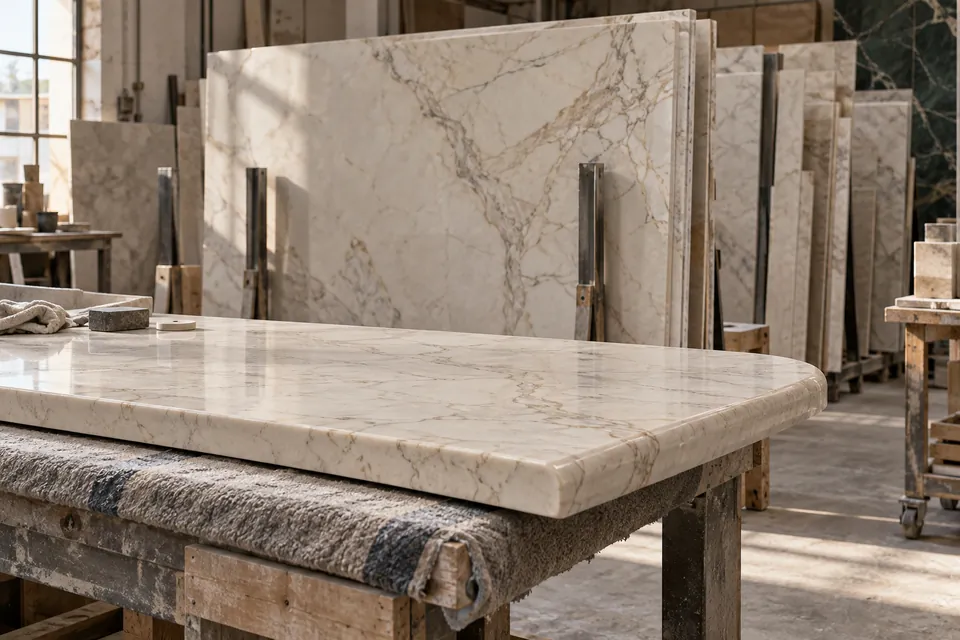
Where stone meets timber, metal or another stone, levels and finishes must be coordinated. Areas requiring visual continuity need additional consideration of slab and piece matching. A shared stone name does not imply an identical pattern in every slab; this should be understood during material approval.
Project stages
Scope, approval stages and the installation programme are defined for each project.
Illustrative images · AI-generated
Application requirements
Establish the use conditions and design expectations for the floor, wall, counter or bespoke element.
Stone and finish selection
Consider samples, slab appearance and surface finish against the project requirements.
Manufacturing details
Resolve dimensions, edges, openings and connections to adjacent materials for production.
Installation coordination
Review substrates, supports and installation sequence alongside the surrounding work.
Technical considerations
Material selection and conditions of use
Intensity of use, exposure to water, cleaning methods and the intended surface appearance all inform the choice. Care requirements vary by stone and application. A proposal needs to define slab characteristics, finish, piece dimensions and installation scope as well as the stone name. Technical suitability should be assessed for the selected product and its intended location.
From the project archive
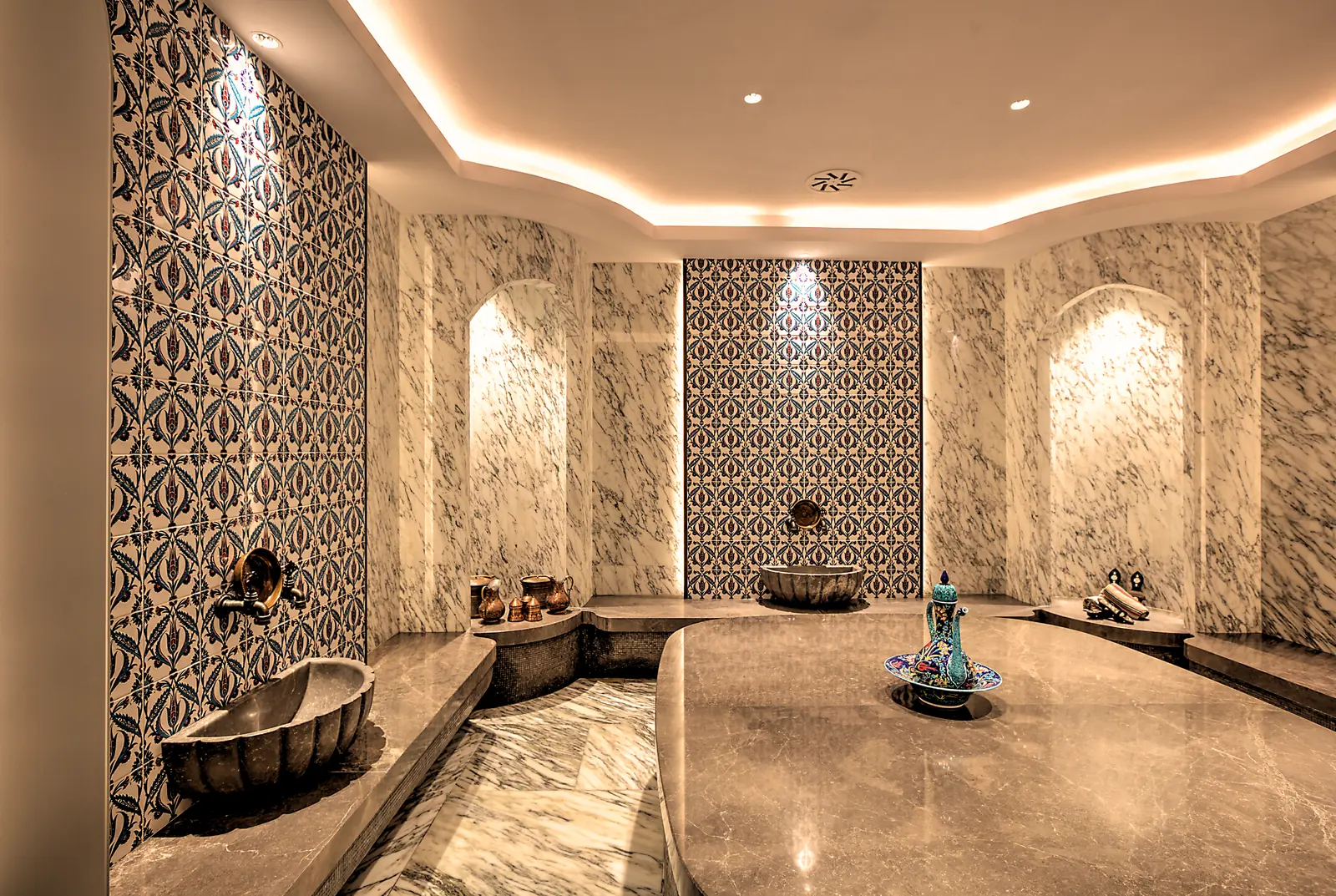
Four Seasons Hotels & Resorts
Explore more photographs from this interior in the project gallery.
 View the project ↗
Frequently asked questions
Which marble applications does ARTMİM offer?
The marble service includes countertops, flooring and decorative natural stone elements. ARTMİM manufactures and installs marble in house. The scope of an individual piece is clarified through its dimensions and installation requirements.
Will the whole installation look identical to a marble sample?
Natural stone can vary in tone and veining. A small sample introduces the material; a large surface also requires consideration of slabs and piece layouts. Expectations of repetition should account for the natural characteristics of the stone.
What matters when selecting marble for wet areas?
Consider surface finish, intended use, water exposure and cleaning conditions together. Required technical suitability should be checked using product information. Visual preference alone does not establish that a stone suits every wet-area application.
What should a marble enquiry include?
Share the layout, approximate dimensions, stone preference, finish expectations and any edge or junction details. Current photographs and information about adjacent materials also help define the installation scope.